
At a glance
Jin Jun Mei is a bud-based Chinese black tea associated with Tongmu in the Wuyi Mountains of Fujian. It developed from the region’s black-tea tradition and is known for a sweet, fragrant profile. Read the product’s own origin and ingredient details rather than relying on the name alone.
| Detail | What to know |
|---|---|
| Chinese name | 金骏眉 — Jīn Jùn Méi |
| Other common wording | Jinjunmei; Golden Eyebrow |
| Tea family | Black tea, called hong cha in Chinese |
| Origin associated with its development | Tongmu, Wuyishan, Fujian |
| Typical leaf form | Slender, tightly made buds with dark and golden tones |
| First thing to check | Producer, claimed origin and the product’s brewing directions |
Taste and appearance
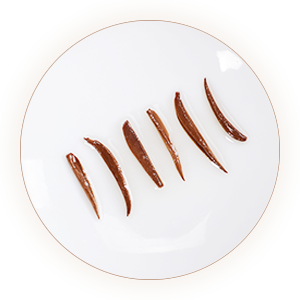
The dry-leaf photograph is shown at the top of this guide. Illustrations are retained from the Chinese edition. They are not TeaPlain tasting samples or proof of origin or grade.
The previous liquor photograph is omitted because the same image was used for different teas in the archive.
Descriptions often emphasise floral, fruity and honey-like aromas with a sweet finish. The intensity and balance depend on the actual tea and how it is brewed. “Honey-like” is a tasting description, not a statement that honey was added; check the ingredients if the product is flavoured.
The dry buds may show both dark and golden colours, and the infusion is often described as golden and clear. Treat these as descriptive features, not a colour chart for grading or proving origin. A photograph cannot establish where a packet was grown.
Grade characteristics
These are the Chinese edition’s descriptive tiers, retained for comparison rather than presented as a verified universal Jin Jun Mei grading system. “Extra” and numbered tiers may be seller-specific. More golden down, a golden ring in a cup or a higher price does not by itself establish grade or Tongmu origin.
| Feature | Extra tier — 特级 | Tier 1 — 一级 | Tier 2 — 二级 |
|---|---|---|---|
| Dry-bud shape | Fine, tightly made and substantial buds, with little visible down | Tight, neat buds with some golden down | Fine, tightly made buds |
| Dry-bud colour | Mixed dark, gold and yellow tones with lustre | Mixed dark, gold and yellow tones | Gold and yellow tones |
| Liquor | Clear, rich golden colour | Clear golden colour | Bright golden colour |
| Aroma | Persistent floral, fruity and honey-like character | Lasting floral, fruity and honey-like character | Lighter floral and fruity character |
| Taste | Fresh, lively and sweet | Sweet with a lasting finish | Mellow and sweet |
| Infused buds | Slender, bright and copper-coloured | Plump, bright and copper-coloured | Neat, bright and copper-coloured |
Names and origin
Tongmu is associated with both Jin Jun Mei’s development and the Zhengshan Xiaozhong black-tea tradition. The relationship does not mean you should expect the same flavour from every Xiaozhong and every Jin Jun Mei.
Jin Jun Mei is generally presented as an unsmoked bud black tea. If you know Lapsang Souchong mainly through pine-smoked examples, do not expect that smoke to define this tea. Our Zhengshan Xiaozhong guide explains the smoked and unsmoked distinction.
The words “Jin Jun Mei” alone are not a full product specification. Ask for the named growing area, maker and harvest information, especially when an origin claim is part of the price.
Everyday benefits
This tea contains caffeine, which can support alertness. Taken without added sugar, it offers a flavourful alternative to sweetened drinks. Tea also contributes to daily fluid intake. These are everyday drink choices, not evidence that this named tea treats high cholesterol, improves immunity or produces weight loss.
Who may enjoy this tea
You may enjoy it if you like fragrant black teas, floral or honey-like tasting notes, or short repeated infusions. It is a flavour choice for adults who want a caffeinated drink, not a recommendation for people described as having a “cold constitution” or low immunity.
When to take care
- Caffeine sensitivity or sleep problems: consider your total caffeine intake and avoid it near bedtime if it disturbs your sleep.
- Pregnancy, breastfeeding or medicines: ask a clinician or pharmacist about your caffeine intake and any relevant medicine instructions.
- Iron supplements: follow the medicine’s instructions about separating tea from the dose; do not treat tea as a remedy for anaemia.
These considerations depend on the person and preparation, rather than a blanket prohibition based on tea colour or traditional “hot” and “cold” categories.
How to brew
Original Chinese gaiwan method
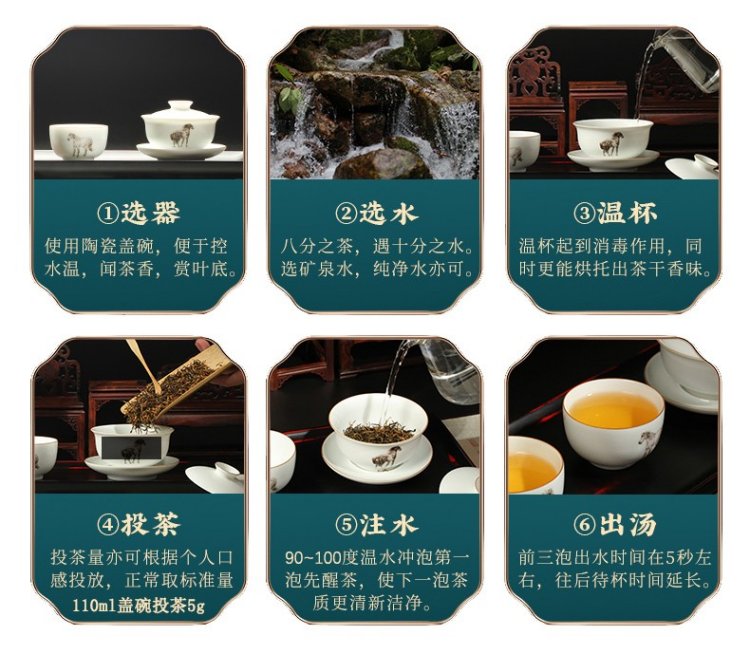
The gaiwan instructions below follow the original Chinese brewing diagram. They describe the pictured method, not a universal recipe for every packet. The 110 mL label is the gaiwan’s nominal capacity; the diagram does not specify the actual water added. Follow your packet’s directions when they give a different complete method.
Use a porcelain gaiwan and preheat it. Add 5 g of tea and use water at 90–100°C / 194–212°F. The diagram shows a quick initial wetting or rinse before the drinking infusions. Pour off after about 5 seconds for the first three short infusions, then extend later infusions to taste.
Reading the original wording: the diagram describes warming as “disinfection.” Treat this step as preheating only; it does not establish a validated disinfection process. The original Chinese image is retained unchanged.
Mug method and vessel-specific starting points
Editorial starting points, awaiting hands-on testing. These methods are for loose, unflavoured Jin Jun Mei buds. Follow specific packet directions first. Both methods separate the tea from the drink.
On a small screen, scroll the table sideways to see all brewing details.
| Method | Tea | Actual water / pictured vessel | Temperature | First infusion |
|---|---|---|---|---|
| Mug with a removable basket, or glazed teapot | 3 g | 250 mL / about 8.5 US fl oz | 95°C / 203°F | 2 minutes, then remove the basket or decant completely |
| Gaiwan shown in the diagram | 5 g | 110 mL nominal capacity; actual fill not specified | 90–100°C / 194–212°F | About 5 seconds for the first three short infusions, then extend; decant completely |
For the mug method, use heat-safe teaware with room above the measured water level; a vessel of at least 300 mL is a useful starting size. Keep the buds inside the basket or strain them when decanting.
The small-pot method is a high-leaf, short-infusion approach. Start timing when water touches the buds and account for pouring time. If your vessel drains slowly or the first infusion is too strong, reduce the leaf amount rather than leaving the same high dose in water for longer. A preliminary rinse is optional and separate from the first drinking infusion; it is not a sterilisation step.
Let the infusion cool enough to sip. Try further infusions if you enjoy them, extending the time as needed rather than expecting a fixed number. Different suppliers give different complete methods, including hotter water and longer infusions at different ratios. The gaiwan row follows the original diagram; the mug row is an editorial starting point. Neither means that another complete method is wrong. See brewing without a gaiwan for ordinary teaware.
Adjust your cup
| What you notice | One change to try next time |
|---|---|
| Too strong, bitter or drying | Separate the liquid fully and shorten the next infusion; try less leaf if pouring speed is the limit |
| Weak or watery | Keep the water amount fixed and allow a little longer before increasing the tea dose |
| An overly concentrated first gaiwan cup | Check that you used seconds, not the mug method’s minutes |
| Less sweetness than expected | Compare your preparation with the packet’s directions; a flavour description is not a guarantee for every cup |
Change one variable at a time. Fix a disappointing first cup gives a fuller troubleshooting sequence.
How to buy
Ask who made the tea, where it was grown, what the stated grade means, and how much tea the packet contains. Keep the production or packing date separate from any harvest claim.
Do not use the proportion of golden buds, a golden-looking cup, decorative packaging or the price alone as proof of quality or origin. A claimed standard should be identified by the seller; a star table is not a substitute for it.
Start with a sample when possible. Compare price per gram alongside the product details instead of assuming that two packets with the same name are equivalent. Our first-purchase guide has questions you can send to a supplier.
China price reference
Undated figures retained from the Chinese edition, in Chinese yuan (CNY). The original entry did not record a brand, product batch or quote date. These are not verified current retail quotes or manufacturer-suggested retail prices.
| Chinese-edition tier | CNY per 500 g (one jin) | Equivalent CNY per 100 g |
|---|---|---|
| Extra tier — 特级 | 6,000 | 1,200 |
| Tier 1 — 一级 | 1,100 | 220 |
| Tier 2 — 二级 | 700 | 140 |
The 100 g column is a unit conversion, not a quotation for a 100 g pack. For a current purchase, ask for the actual branded product, weight, date and quoted price. UK or US shelf prices may also include shipping, import costs and local retail costs; direct currency conversion is not a like-for-like offer.
How to store
Original storage method
Use a sealed foil pouch or a suitably lined paper pouch, then a clean, dry, tightly closed tin or other food-storage container. Keep it away from moisture, light and strong smells, and reseal the packet after every use. Plain paper without a suitable moisture barrier is not equivalent to a sealed tea pouch.
The Chinese edition used targets below 25°C / 77°F and below 50% relative humidity, and a general 24-month shelf-life reference. This is legacy guidance, not a fresh expiry calculation or proof that every product has the same shelf life. Keep and follow the actual packet’s conditions and dates.
In a UK or US kitchen
A dry cupboard away from the hob or stove, oven, dishwasher steam and spice containers is a practical location when consistent with the label. Refrigeration is not a default requirement for ordinary daily black-tea storage. Keep a small working portion if helpful, and close the inner bag even when the outer tin has a lid.
For opening, daily portions and handling a cold packet, see store an opened packet.
Origin, processing and history
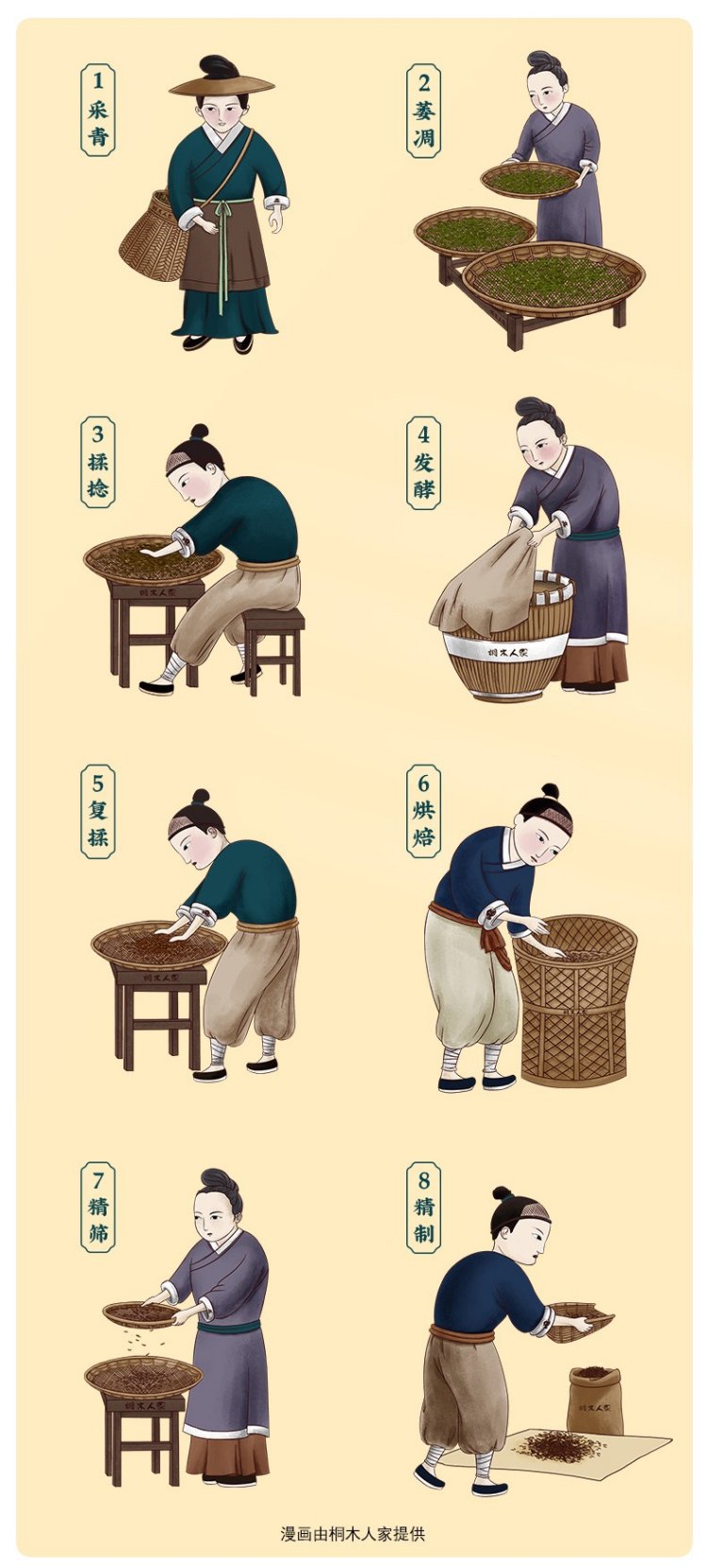
Jin Jun Mei was developed in 2005 in the Tongmu black-tea setting. It uses young buds and a process involving withering, rolling, oxidation and drying, drawing on and adapting local Xiaozhong techniques.
Here, oxidation is the leaf-processing stage often described as “fermentation” in translated Chinese tea terminology. Jin Jun Mei’s usual unsmoked profile distinguishes it from pine-smoked Xiaozhong examples.
Accounts of individual contributions and of the name’s meaning differ in emphasis. The useful distinction for a buyer is between that history and a current product’s traceable maker, origin and material; the name by itself cannot answer all three.
Common questions
Is Jin Jun Mei a green or black tea?
It is a black tea. A golden infusion or golden hairs on the dry buds do not make it a green tea.
Is it the same as smoked Lapsang Souchong?
It is connected to the Tongmu black-tea tradition, but its usual profile is unsmoked. Check the specific product rather than transferring expectations from a smoked Lapsang.
Are more golden buds always better?
Colour alone cannot establish quality or origin. Ask for the product details and judge whether a sample suits your taste instead of relying on a visual rule.
Editorial notes and updates
Updated 16 October 2026. This guide describes the tea and how to approach a packet; it is not a grading or authenticity assessment. Brewing tables are editorial starting points awaiting hands-on testing. Product-specific directions take precedence.