
At a glance
Peach Oolong combines oolong with peach flavour, fruit or other declared ingredients. Formulas vary: a fruity name does not guarantee dried peach pieces, one tea origin or an unsweetened drink.
| Detail | What to know |
|---|---|
| Chinese name | 蜜桃乌龙茶 |
| Tea family | Scented tea |
| Associated origin | Multiple tea bases and manufacturing origins; not restricted to Bozhou |
| Leaf form | Flavoured or blended oolong, loose or bagged |
Taste and appearance
The old notes describe full rolled particles, a yellow-green dry colour, clear golden liquor, lasting fruit and tea aromas, and a sweet, mellow, brisk taste. The original bagged-infusion photo is a reference example, not a confirmed formula or tasting sample.
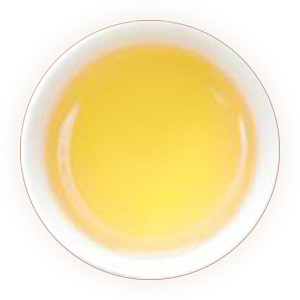
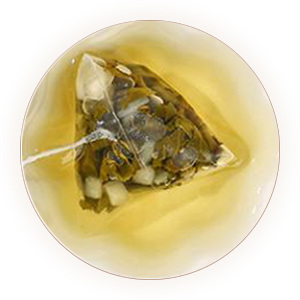
The cover is the original dry-leaf illustration. These images are not TeaPlain tasting samples or proof of origin, grade, age, authenticity or image rights clearance.
Grade characteristics
This preserves the earlier Chinese edition’s sensory comparison. It is not a complete verified current standard table and does not grade your packet. Plant material, growing area, processing and grade are separate details. Decorative star rankings are omitted.
On a small screen, scroll the table sideways to compare the grades.
| Feature | Extra grade (old table) | Grade 1 (old table) |
|---|---|---|
| Shape | Full, even particles without crumbs | Full, fairly even particles without crumbs |
| Dry colour | Sandy green with a slight yellow cast | Sandy green with a slight yellow cast |
| Liquor | Clear golden | Clear bright yellow |
| Aroma | Rich lasting fruit aroma and strong tea aroma | Clean fruit aroma and strong tea aroma |
| Taste | Sweet, mellow and brisk | Sweet and brisk |
| Infused material | Full, lively and clean | Clean |
Only two sensory columns were supplied, although the old price list has three tiers. The missing third sensory grade is not invented. This comparison does not grade all peach-flavoured formulations.
Names and origin
Mitao Wulong means peach oolong. A producer’s white-peach example lists oolong, rose petals and peach aroma; an independent tea-association recipe combines brewed oolong with fresh peach and sugar. These illustrate different products, not one mandatory recipe. The old distribution of peach origin, tea origin and Bozhou processing is not a universal supply-chain rule. A ready-to-drink bottle or a sweetened fruit preparation cannot be compared directly with dry loose tea.
Everyday benefits
The useful role here is an enjoyable drink with a particular aroma, not a treatment. Where tea leaves are included, the drink contains caffeine unless specifically decaffeinated. A flower-only product and a tea-based blend must be distinguished on the actual label. The former page’s claims about sleep, immunity, weight loss or disease do not establish effects of a brewed cup.
Who may enjoy this tea
For people who like fruit aromas with oolong. If comparing unsweetened and sweetened options, read the actual formula rather than assuming fruity sweetness means added sugar or proves no added sugar.
When to take care
Check the complete ingredients label and avoid any ingredient to which you have a known allergy. A scented or blended name does not establish whether the product contains tea leaves, added sweeteners or other botanicals. Where actual tea leaves are present, account for caffeine from all drinks and use your clinician’s advice during pregnancy or with relevant conditions or medicines. Do not use the drink to treat symptoms.
Iron supplements: if prescribed iron, follow its directions and ask the pharmacist about separation from tea-containing drinks; do not change treatment based on this page.
How to brew
Original prose: glass or porcelain cup
The inherited method uses 1:50, 90–100°C / 194–212°F, refilling at about one-third liquid remaining, with roughly three refills. No first steeping time is supplied. This is a retained method, not a universal recipe for every formulation.
| Detail | Original prose with an explicit ratio example |
|---|---|
| Material | 3 g as an editorial arithmetic example, only if suitable for the identified product |
| Actual water | 150 mL / about 5.1 US fl oz, measured actual water at 1:50 |
| Vessel | Heat-safe glass or porcelain cup with room for material and water |
| Temperature | 90–100°C / 194–212°F |
| First drink | No time recorded; use a complete packet method |
| Refill | About one-third remaining; around three refills is not a strength guarantee |
These inherited directions and arithmetic examples are awaiting hands-on testing. Follow the actual food product’s ingredients and full instructions first. Leaf form, added ingredients and bag size matter; the same name does not establish a serving. Strain or transfer to stop continuous extraction, and let the cup cool enough to sip. Cold-panel limitation: an old illustration is not a validated cold-preparation protocol. Follow a product specifically labelled for that method; do not infer food safety from a short soaking time or the presence of ice.
Read the original illustration separately
Illustration method: individual bag, mass unspecified. Hot panel: one bag, 85–95°C / 185–203°F, 3–5 minutes, but no actual water volume. Cold panel: one bag, about 200 mL cold water, 10–15 minutes, with refrigeration mentioned; no numeric cold temperature or bag mass. Do not combine the cold panel’s 200 mL with the hot panel as though it were printed there. These panels do not verify cold-brew suitability or safety for an arbitrary blend. Use complete directions from the actual product; no standalone cold-brew recipe is established here.
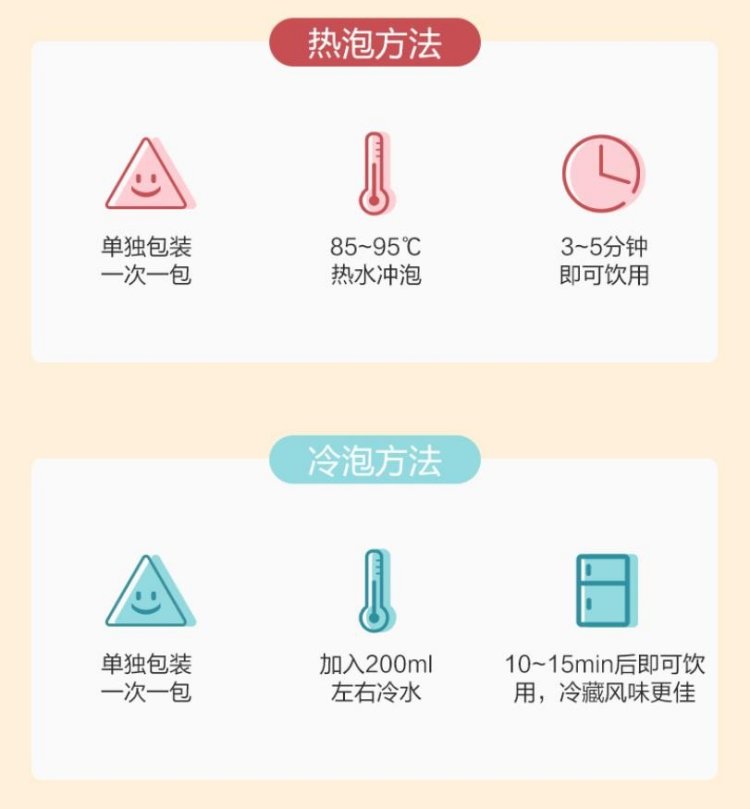
For ordinary teaware options, see brew without a gaiwan. Keep each complete method together instead of selecting temperature, dose and time from different preparations.
Adjust your cup
| What you notice | One change to try |
|---|---|
| Too strong, bitter or drying | Separate the liquid from the leaves; shorten contact time or use less tea next time |
| Weak or watery | Keep the measured water fixed and try a longer infusion before changing the leaf dose |
| Later infusions become stronger | Check whether liquid was left sitting with the leaves |
| Different from a flavour description | Compare the actual product and method; a description is not a promise for every cup |
Change one variable at a time. For a fuller sequence, see fix a disappointing first cup.
How to buy
Check loose tea versus bag versus bottled drink, bag mass, base tea, fruit/flavourings, allergens and added sugars where relevant. Buy a small pack first. The old three price tiers are not evidence that an actual current maker sells all three grades.
See buy your first Chinese tea for packet comparisons.
China price reference
Undated figures retained from the Chinese edition, in Chinese yuan (CNY). No original brand, batch, harvest or quotation date was recorded. These are not verified current retail quotes, a market average or manufacturer-suggested retail prices.
| Chinese-edition tier | CNY per 500 g (one jin) | Equivalent CNY per 100 g |
|---|---|---|
| Extra grade | 450 | 90 |
| Grade 1 | 300 | 60 |
| Grade 2 | 190 | 38 |
Per 100 g is an arithmetic conversion, not a quoted packet. Do not infer a missing sensory or price tier. Compare actual growing area, style, harvest, roast, weight and channel. A currency conversion does not make a UK or US retail offer comparable to a China historical figure.
How to store
Original storage method
Keep the bag or tin tightly sealed, cool, dry and protected from light and moisture, as in the original handling. It also offers refrigeration for slow use; keep that conditional on the actual blend’s label and sealed moisture/odour protection. Cold storage does not establish a new expiry or reverse deterioration.
In a UK or US kitchen
Keep a working pack away from the hob or stove, dishwasher steam, spices and sunlight. Reseal promptly with dry hands and a dry scoop. If the actual label calls for cold storage, use an odour-proof moisture barrier and let the pack warm while sealed before opening; refrigeration does not reset its date. See storing opened tea.
Origin, processing and history
No manufacturing map was supplied for this entry. Peach-flavoured, fruit-piece and freshly mixed drinks involve different preparation paths. The available labels support variation in formula, not a single mandatory process, mandatory Bozhou location or therapeutic effects. No replacement process picture is invented.
Common questions
Does peach oolong always contain pieces of peach?
No. Read the full ingredients: a product may use flavouring, fruit pieces, other flowers or a different combination. A peach-like smell cannot establish fruit quantity, added sugar or suitability for someone with a known ingredient allergy.
Can I move one number from this recipe into a different vessel?
Keep leaf form, measured dose and actual water, temperature, timing and separation together. Nominal capacity or a fill fraction is not a measured ratio.
Compare Osmanthus Oolong, or browse the scented tea overview.
Editorial notes and updates
Updated 16 October 2026. Valid original descriptions, sensory comparisons, prose and image methods, storage handling, China price figures and usable pictures are retained with their scope. Doubtful medical, ranking and exact historical claims are revised or omitted. Current full grade clauses and historical prices are not certified. Original Chinese-labelled graphics have English reading notes; no TeaPlain tasting or brewing test is claimed. Internal research and image audits record the decisions.