At a glance
Meicha is a vine-leaf infusion, despite the berry-like English translation of its Chinese name. It is not a berry-flavoured Camellia tea or proof of survival from an ancient mass extinction.
| Detail | What to know |
|---|---|
| Chinese name | 莓茶 |
| Browsing group | Herbal infusion |
| Associated origin | The Chinese plant account records several southern Chinese provinces; verify each product’s source |
| Material form | Identified prepared vine-leaf material; check stems, granules and extracts separately |
Taste and appearance
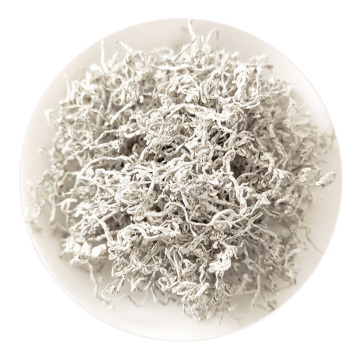
The old table distinguishes fine tight curled stem-and-leaf material with silver-grey coating, more wrinkled flatter grey-green leaves with pale particles, and folded brown-green leaves with yellowish-white coating. Liquor ranges from bright yellow to yellow-brown or deep yellow. The cup is fresh and substantial, sweet-returning or slightly bitter; infused leaves range from tender yellow-green stems/leaves to larger softer dark-green leaves. A white surface alone cannot authenticate flavonoid content or rule out spoilage.
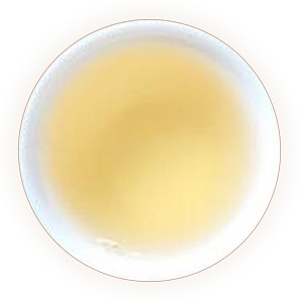
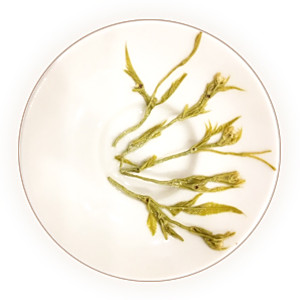
The cover is the original material illustration. These images are not TeaPlain tasting samples or proof of origin, grade, age, authenticity or image rights clearance.
Grade characteristics
This preserves the earlier Chinese edition’s sensory comparison. It is not a complete verified current standard table and does not grade your packet. Plant material, growing area, processing and grade are separate details. Decorative star rankings are omitted.
On a small screen, scroll the table sideways to compare the grades.
| Feature | Extra grade (old comparison) | Grade 1 (old comparison) | Grade 2 (old comparison) |
|---|---|---|---|
| Shape | Fine tight curled clean stems and leaves | Wrinkled curved slightly flat fairly clean leaves | Folded wrinkled fairly even leaves |
| Dry colour | Silver-white or grey-white surface coating | Dark grey-green, pale yellow-white particles beneath | Brown-green with yellow-white coating |
| Liquor | Bright yellow | Fairly bright yellow-brown | Bright deep yellow |
| Aroma | Fresh fairly rich aroma | Fresh aroma | Light fresh aroma |
| Taste | Substantial sweet refreshing, sweet return | Substantial slightly bitter with sweet return | Sweet fairly mellow |
| Infused material | Tender stems/leaves, yellowish green | Fairly tender green-yellow leaves | Larger spread fairly soft dark-green leaves |
Original sensory comparisons retained without star scores; not a complete current national standard or authentication of a packet.
Names and origin
The older botanical account names Ampelopsis grossedentata in Vitaceae, with several southern Chinese provinces rather than an exclusive tiny habitat. China’s 2013 new-food-ingredient text specifies this plant’s leaf and infusion as the eating method. That scope does not identify all vine products, justify eating every stem/root or confer permission for every extract in every country. The old glacier-survivor and immortal-grass stories are not verified botanical history.
Everyday benefits
An unsweetened, clearly identified food-grade infusion can be enjoyed for flavour and as an alternative to a sweetened drink. The earlier therapeutic claims are not established for this cup. It is not a treatment or a substitute for food or prescribed care.
Who may enjoy this tea
For readers who enjoy an identified vine-leaf infusion with a sweet returning taste, rather than a throat, blood-pressure or insomnia remedy.
When to take care
If taking medicines or Iron supplements, follow their instructions and ask a pharmacist about the actual product rather than assume that all herbal drinks have the same interactions. Pregnancy, breastfeeding, allergies and suitability for children need the identified ingredients and preparation; this page gives no medicinal dose.
How to brew
Original prose: glass or porcelain cup
The inherited method uses a heat-safe glass or porcelain cup, 1:50, 90–100°C / 194–212°F water, refilling at about one-third remaining and roughly three infusions. It gives no first steeping time. For an identified food-grade product only, an arithmetic example is 3 g with 150 mL Actual water; that is not a dose validated for every herb. Follow the complete packet instructions first. Different plant species, plant parts and processing cannot share one universal recipe.
These inherited directions are awaiting hands-on testing. Refilling changes the concentration and is not a new measured batch. Let the drink cool enough to sip; do not use a photograph to identify unknown plants.
Read the original illustration separately
Illustration: cup. Put 2–3 g in a 200 mL cup, add 100°C / 212°F water and wait five minutes; two or three infusions are suggested. The note says fill to about 70%, so the cup’s capacity is not Actual water measured into it; it says no rinse. Its warm-vessel or covered-pot suggestion is separate from a measured tested method. Do not assume the prose’s 1:50 is the pictured ratio.
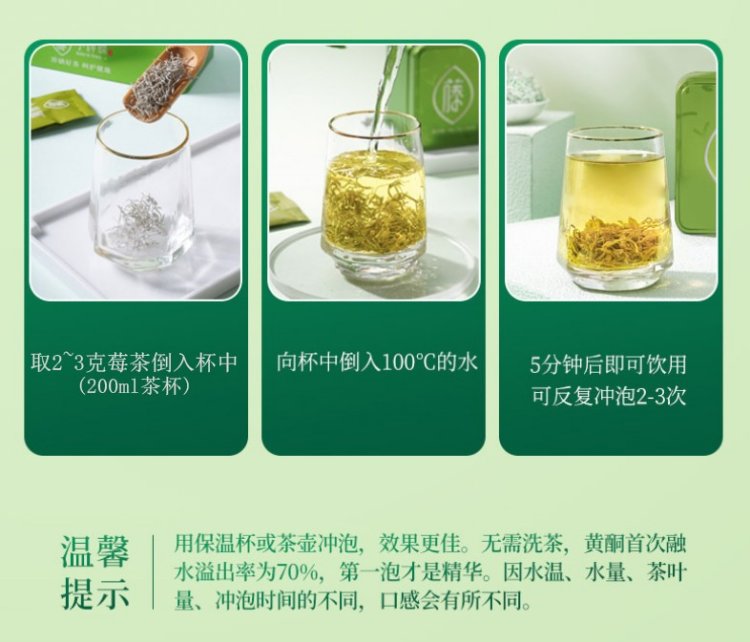
For ordinary teaware options, see brew without a gaiwan. Keep each complete method together instead of selecting temperature, dose and time from different preparations.
Adjust your cup
Identify the ingredients and follow the actual food product’s complete preparation instructions first. Once that is clear, adjust within those directions for taste. Do not increase the dose or boiling time of unknown plant material to make it suitable for drinking.
How to buy
Read the botanical identity, plant part, full ingredients, food-use directions, maker, origin claim, batch and dates. Buy an identified product intended for drinking, rather than a garden plant or an unlabelled medicinal material.
See buy your first Chinese tea for packet comparisons.
China price reference
Undated figures retained from the Chinese edition, in Chinese yuan (CNY). No original brand, batch, harvest or quotation date was recorded. These are not verified current retail quotes, a market average or manufacturer-suggested retail prices.
| Chinese-edition tier | CNY per 500 g (one jin) | Equivalent CNY per 100 g |
|---|---|---|
| Extra grade | 2,500 | 500 |
| Grade 1 | 1,300 | 260 |
| Grade 2 | 1,000 | 200 |
Per 100 g is an arithmetic conversion, not a quoted packet. Do not infer a missing sensory or price tier. Compare actual growing area, style, harvest, roast, weight and channel. A currency conversion does not make a UK or US retail offer comparable to a China historical figure.
How to store
Original storage method
Keep the bag or food-safe container tightly sealed, in a cool dry place protected from light, moisture and strong smells. Reseal after taking a portion and check the closure, particularly during humid seasonal changes. Keep it away from cooking steam, the dishwasher, sunny windows and spices. Follow the product’s date and storage label; no universal shelf life is established here.
The original gives 24 months as a product reference. It is not a verified universal shelf life or a remaining-life prediction for an opened packet; follow its own label and conditions.
Origin, processing and history
The inherited picture lists picking, selection, spreading, initial handling/cooling, screening, rolling, breaking up, renewed handling, wet piling, fermentation, cooling, warming, drying, aroma work, renewed fermentation, removing powder/stems, sorting and grading. This elaborate route is not independently verified for the named leaf product; the process image is withheld rather than assigning it universally to meicha.
Common questions
Is the white coating on meicha proof of quality?
No. Its usual appearance does not test a packet’s composition or exclude mould or damage. Check a traceable maker, labelled storage, dates and condition; do not brew a suspect packet to prove it safe.
Can I move one number from this recipe into a different vessel?
Keep leaf form, measured dose and actual water, temperature, timing and separation together. Nominal capacity or a fill fraction is not a measured ratio.
Compare Lotus Leaf Tea, or browse the herbal infusion overview.
Editorial notes and updates
Updated 16 October 2026. Valid original descriptions, sensory comparisons, prose and image methods, storage handling, China price figures and usable pictures are retained with their scope. Doubtful medical, ranking and exact historical claims are revised or omitted. Current full grade clauses and historical prices are not certified. Original Chinese-labelled graphics have English reading notes; no TeaPlain tasting or brewing test is claimed. Internal research and image audits record the decisions.